A reimagined aircrew helmet built to solve the size, weight and stability problems of legacy helmets while still surpassing military and civilian test standards. Six shell sizes, integrated venting, an adjustable suspension system and a multitude of accessories mean that every crew member gets a custom fit for improved comfort and performance.
Why size and weight matter for helicopter aircrew →
How RATH compares to other helmets on the market →Ready-to-fly configuration: helmet, chinstrap, headset, springwire headband, boom mic and 24" downlead. NVG shim and battery mount sold separately. U.S. MSRP.

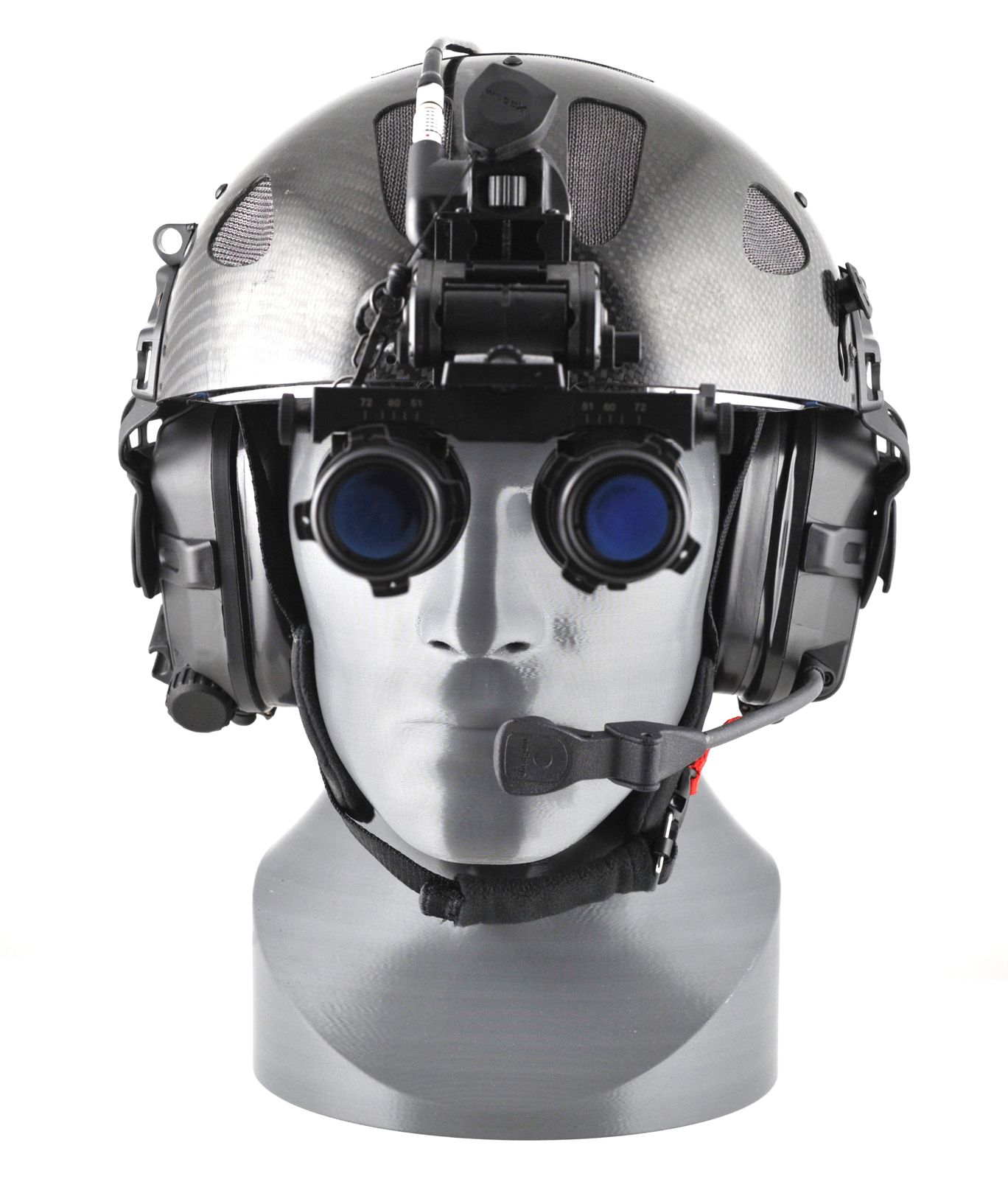
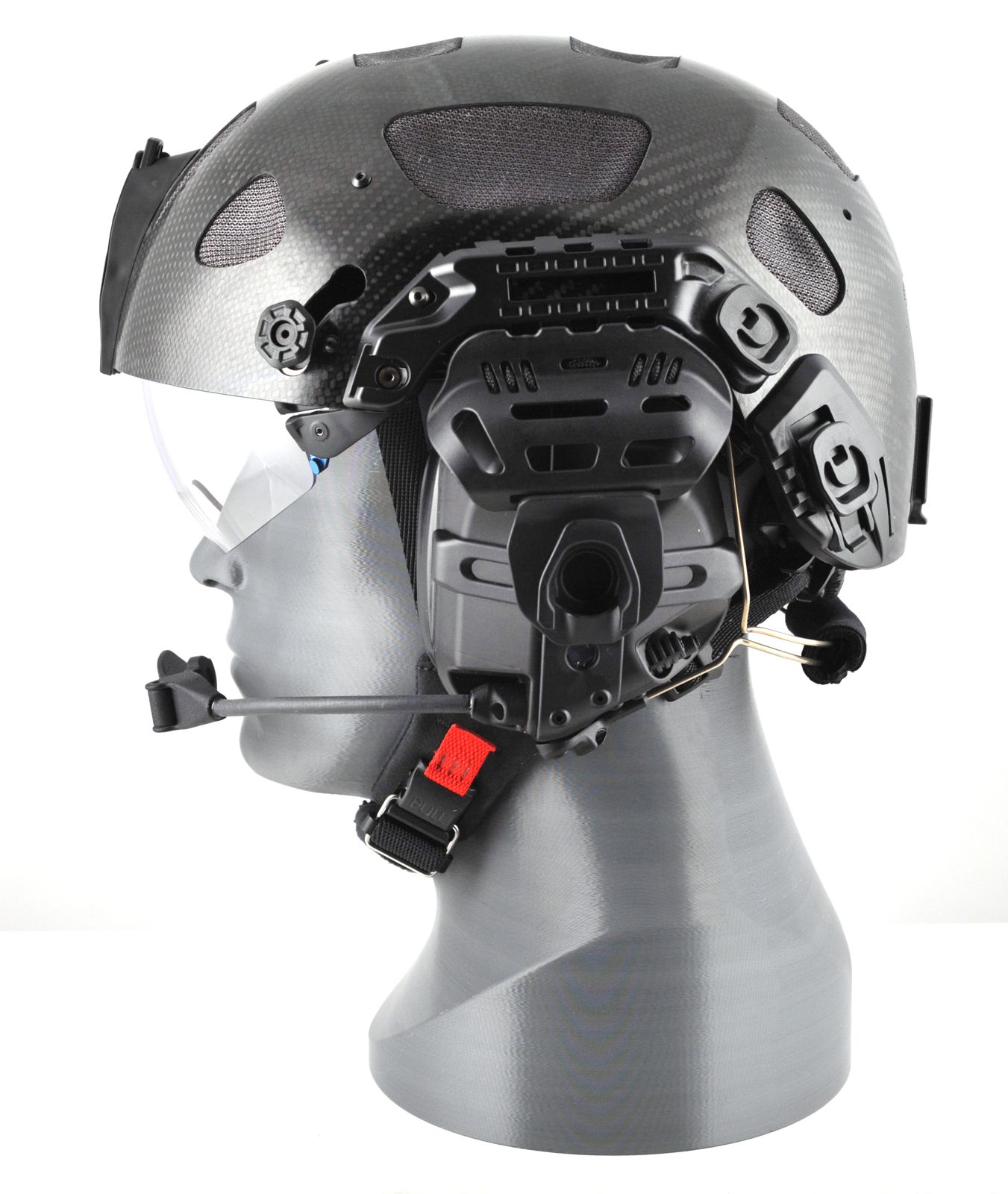


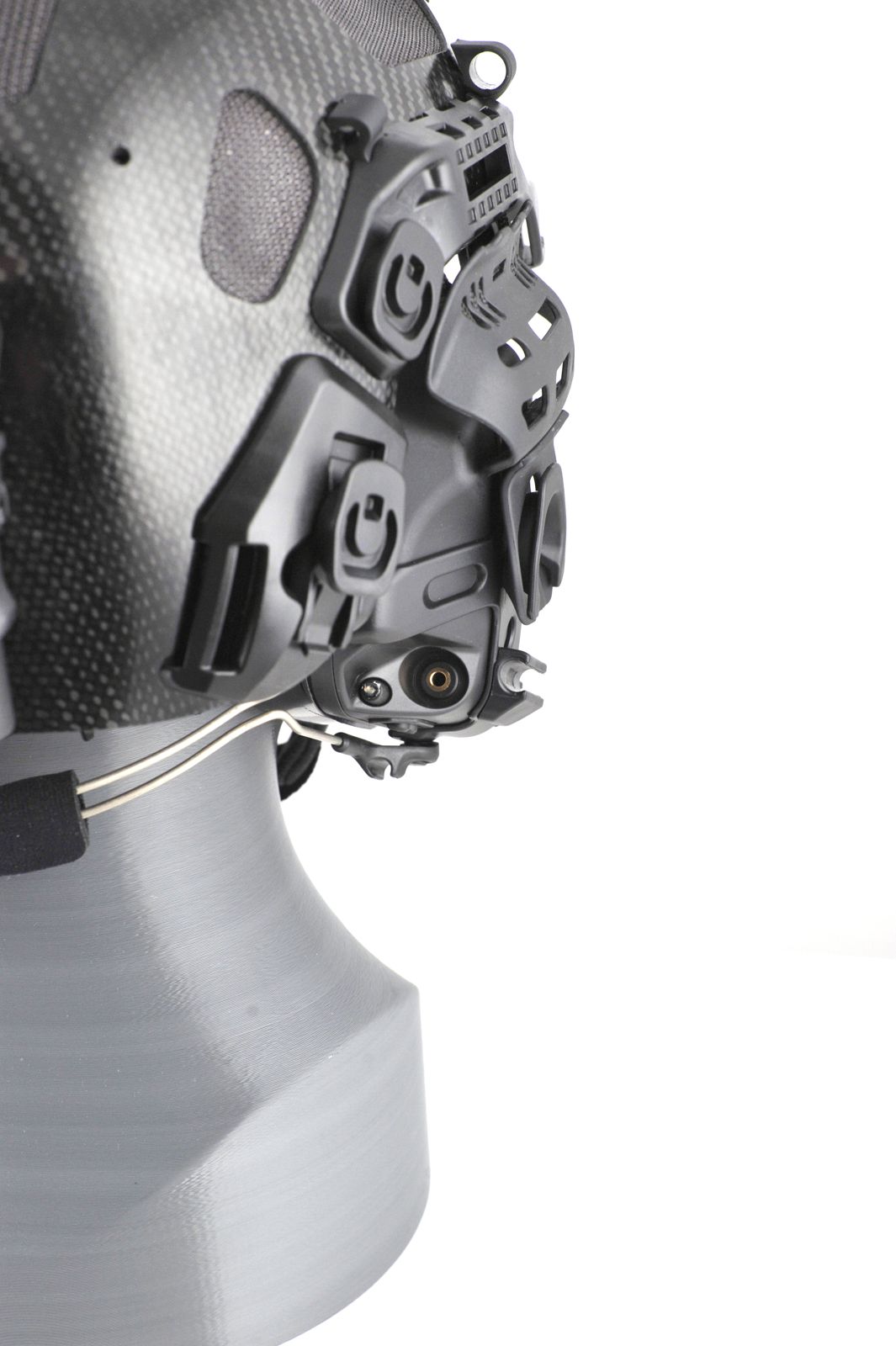
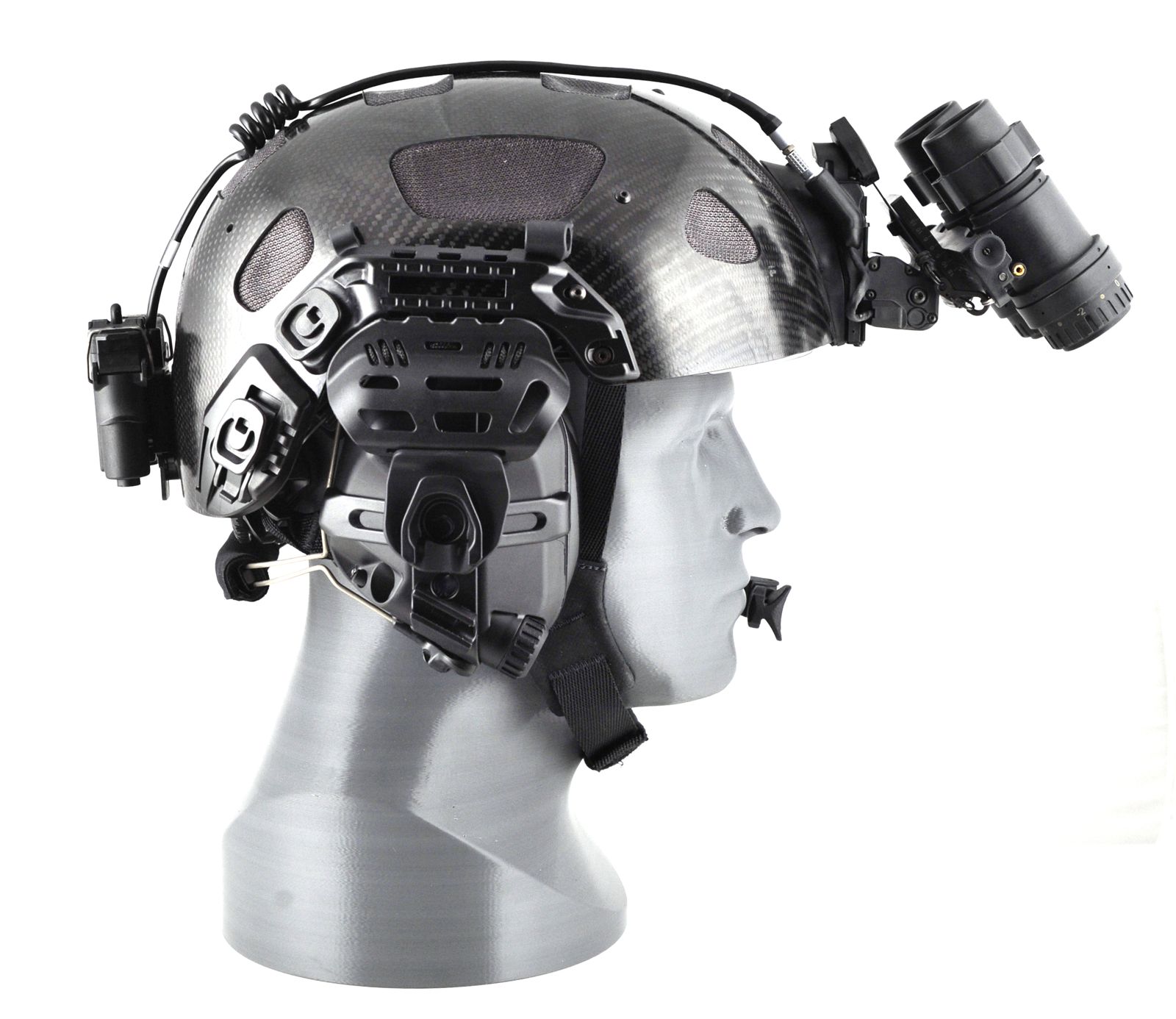
To accommodate a wide range of missions, the RATH has a variety of configurations and accessories. Each component outlined below identifies options that vary for your specific needs. We recommend contacting us directly for assistance with determining the best configuration for you.
The RATH starts with a carbon fiber shell with Dyneema-covered vents. The impact liner inside is what makes it a Tactical or a DOI helmet.
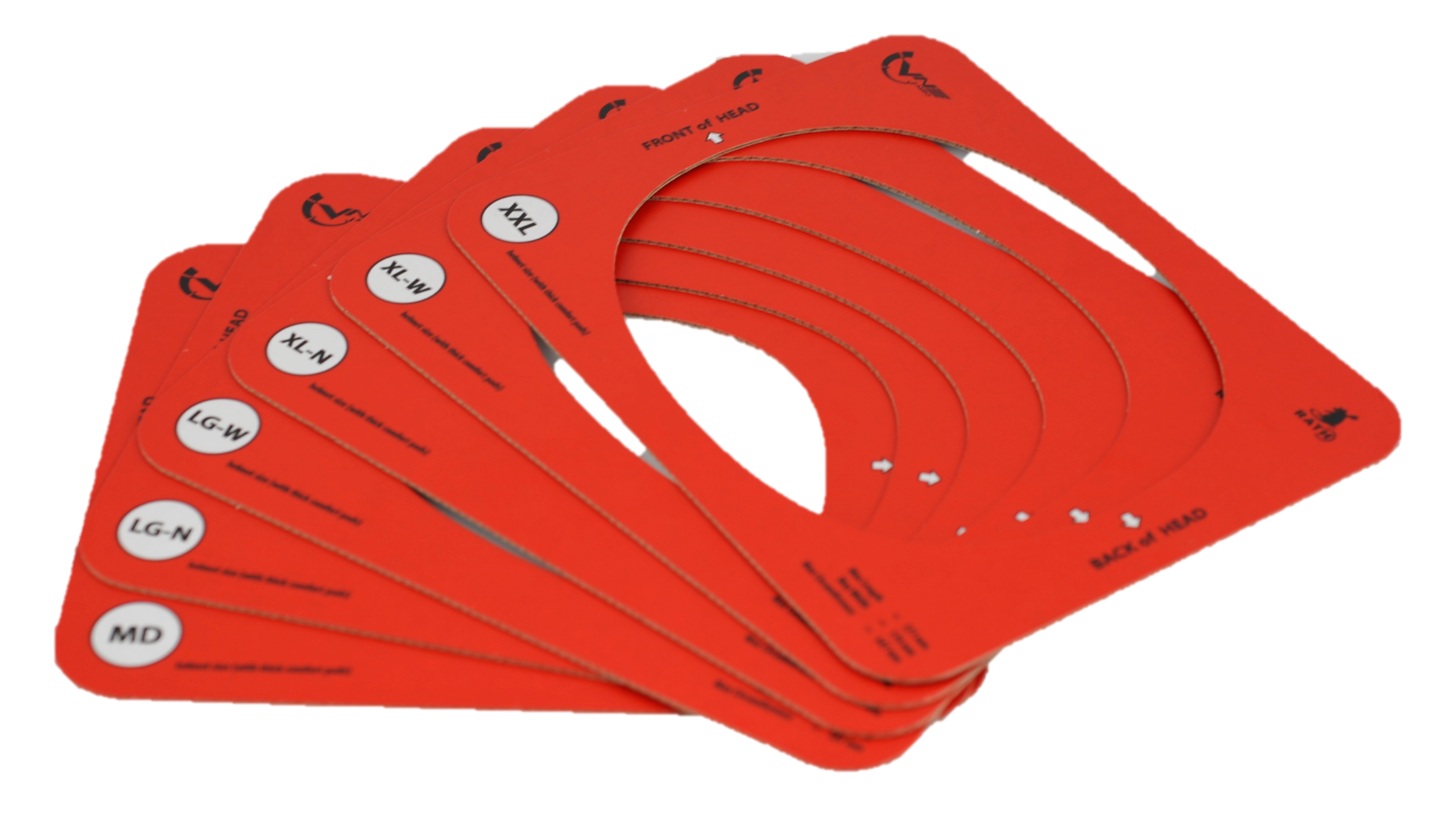
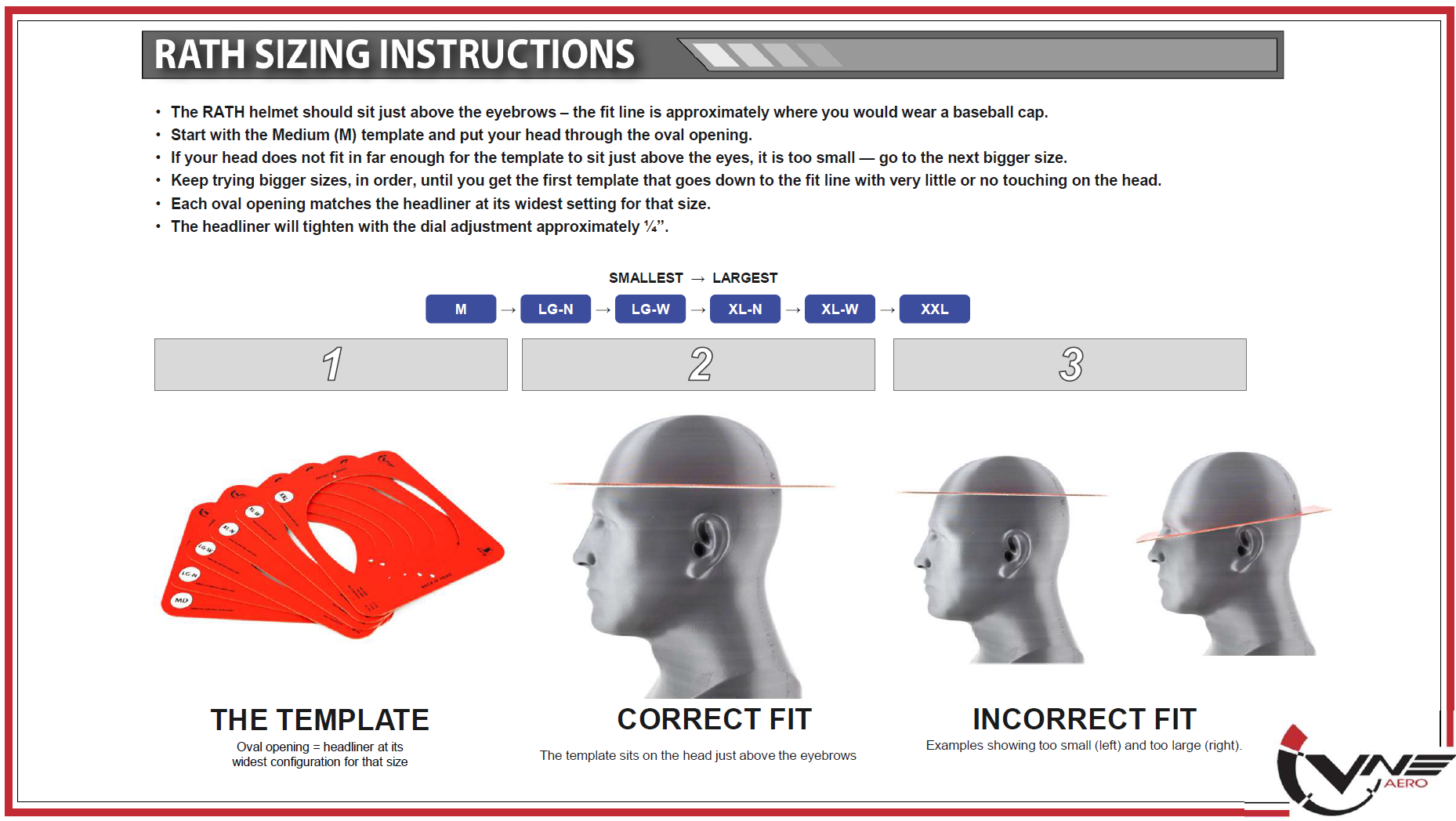
Many competitor helmets have a maximum of three shell sizes and rely on thicker padding to make a bigger, heavier shell fit a smaller head. The RATH rethinks this legacy approach and instead provides six shell sizes to ensure the lightest weight option for each user. This approach is also critical for improving the system CG when wearing accessories during demanding missions.
Because the fit starts with the shell, it's important to determine the right size. Our sizing kit has easy-to-use templates so you can feel confident in your size selection before purchase. Sizing kits are free to interested user groups, so use the contact page to request yours when you are ready to start the process.
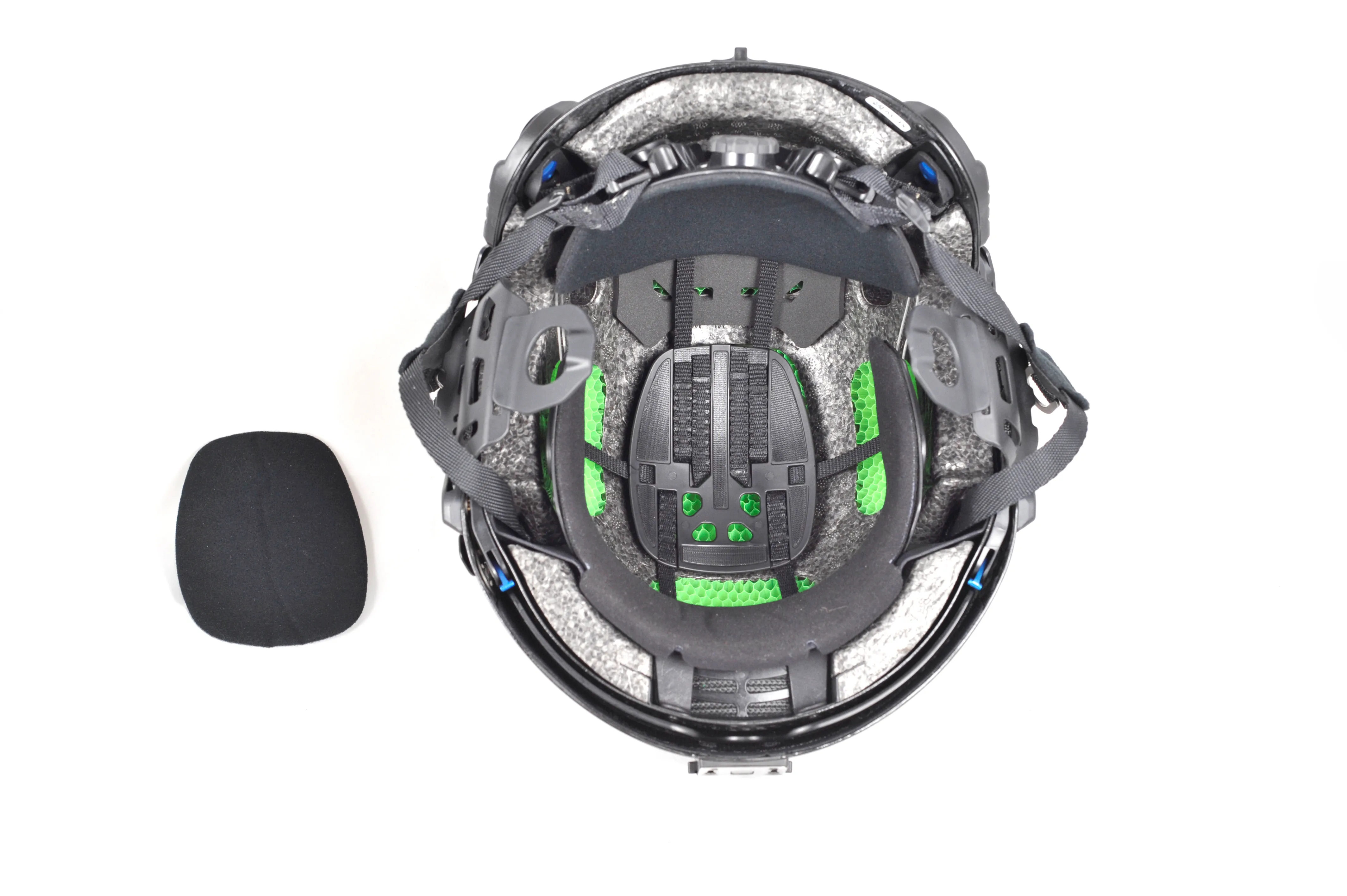
Once the shell size has been determined, the Skullplate Suspension provides fine-tuning to individual head shapes. A dial and cord system provides control of the assembly tightness around your head for a precise, even fit. The ability to contour to varying head profiles ensures superior stability over legacy systems and reduces neck strain during long flights.
Venting paths align through the Skullplate Suspension openings, liner Koroyd, and Dyneema fabric in the shell, so air flows straight through the helmet.
The Skullplate Suspension top plate adjusts for depth and angle using hook and loop straps under the crown pad.
Comfort Pads are designed with Velcro to be easily removable for easy adjustment and care.
The dial at the nape tightens or loosens the Skullplate Suspension. Turn it clockwise to tighten, counterclockwise to loosen, even in flight.
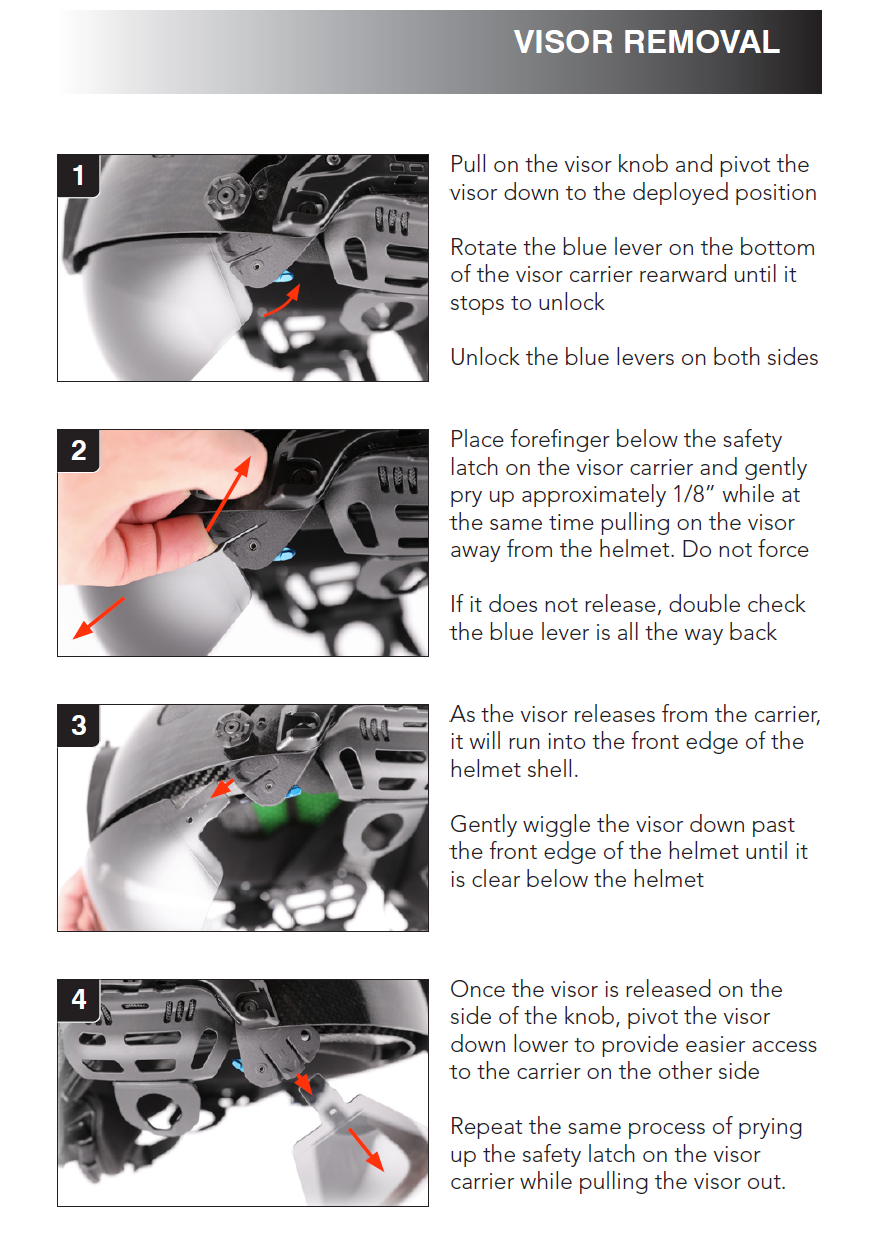
Every standard RATH is provided with a tinted visor installed and a clear visor accessory. Alternate configurations are available for varying preferences and missions.
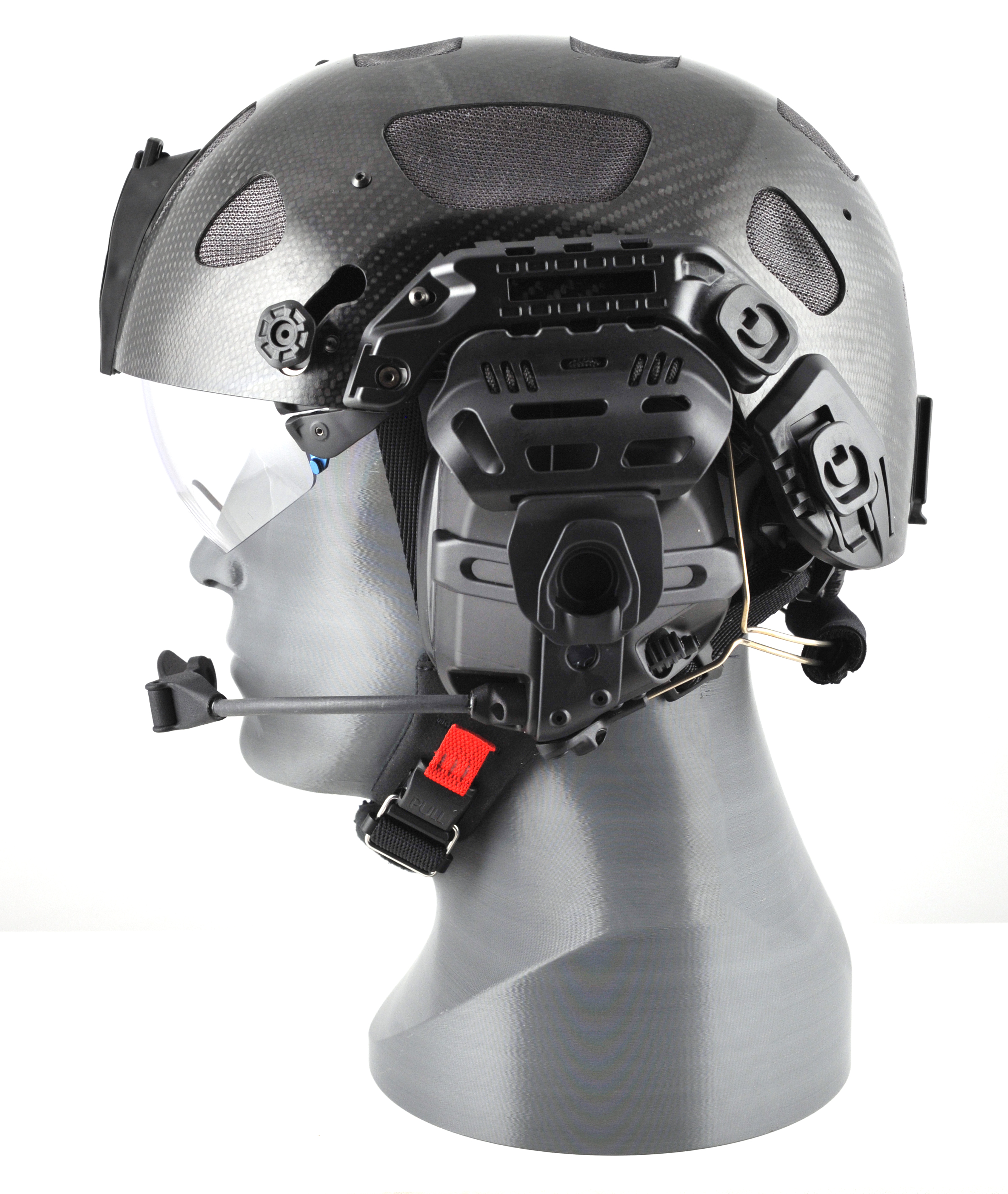
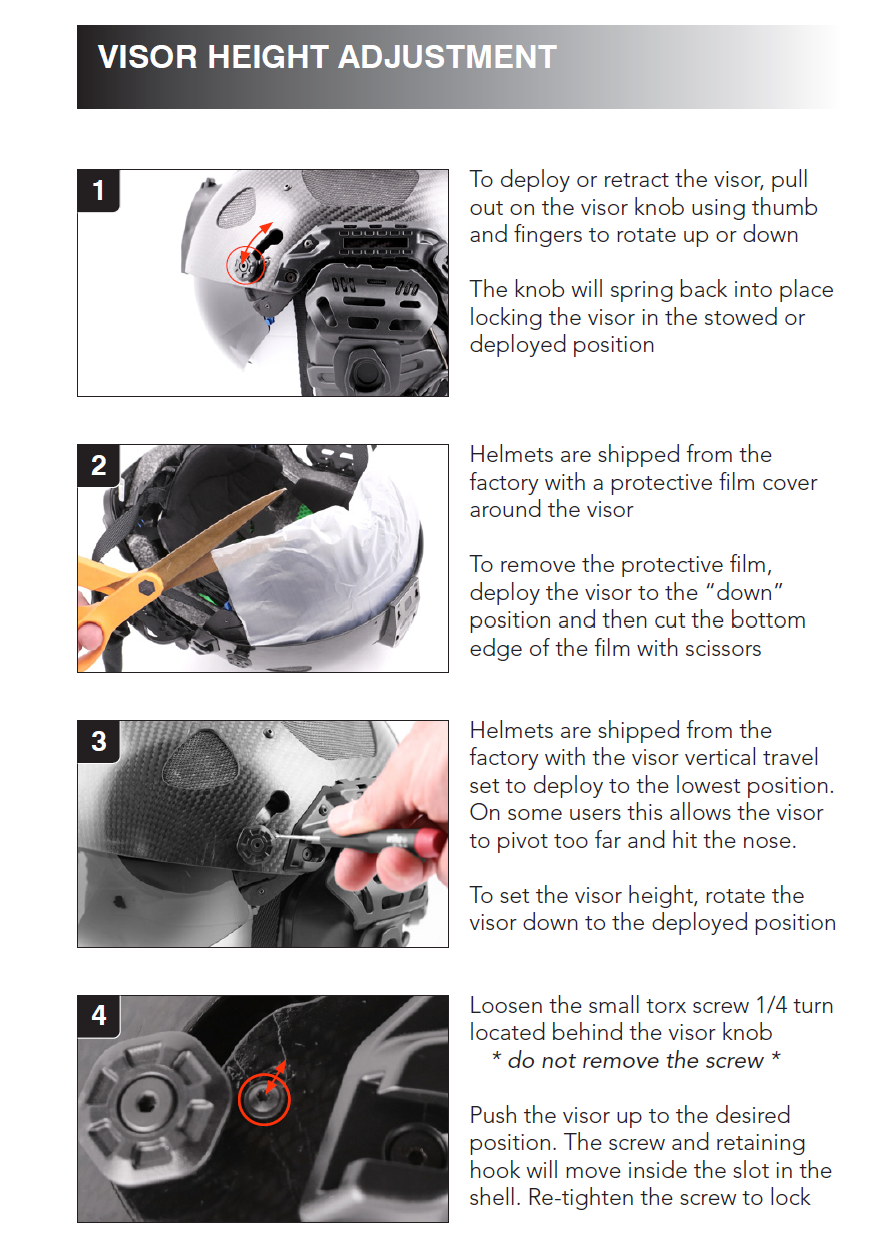
Many competitor aviation helmets carry two visors stacked on the outer shell surface, adding weight and exposing the visors to environmental factors such as dust and debris. The RATH improves this approach by relocating a single visor under the shell, reducing weight and providing visor protection when not in use. The visor operates on a pivot mechanism and not tracks, so swapping visors takes less than a minute and requires no tools.
Visor positioning close to the face reduces environmental interference during flight and improves NVG positioning.
A small set screw behind the visor knob provides the ability to precisely position the visor to your nose.
Photochromic visors are available for users interested in a lens that transitions when exposed to UV light.
All visors can be combined with our customized goggles or glasses for improved protection or alternate configurations.
Wear glasses?Everyday frames can catch the visor on the way down or break the earcup seal. Adjusting the visor height and raising the helmet with the skullplate often helps. Follow the link to see prescrition eyewear that fits under both the visor and the headset.
Flying with glasses →Three buckle styles. The Double D-ring and Fidlock 25 both pass FNS/PD 96-18 and DOI chinstrap retention.
The RATH is available with various NVG shims to attach to your NVG mount and goggles. Options vary depending on user preference and mission.
NVGs need a battery pack, and often a counterweight, at the back of the helmet. Choose how they attach.
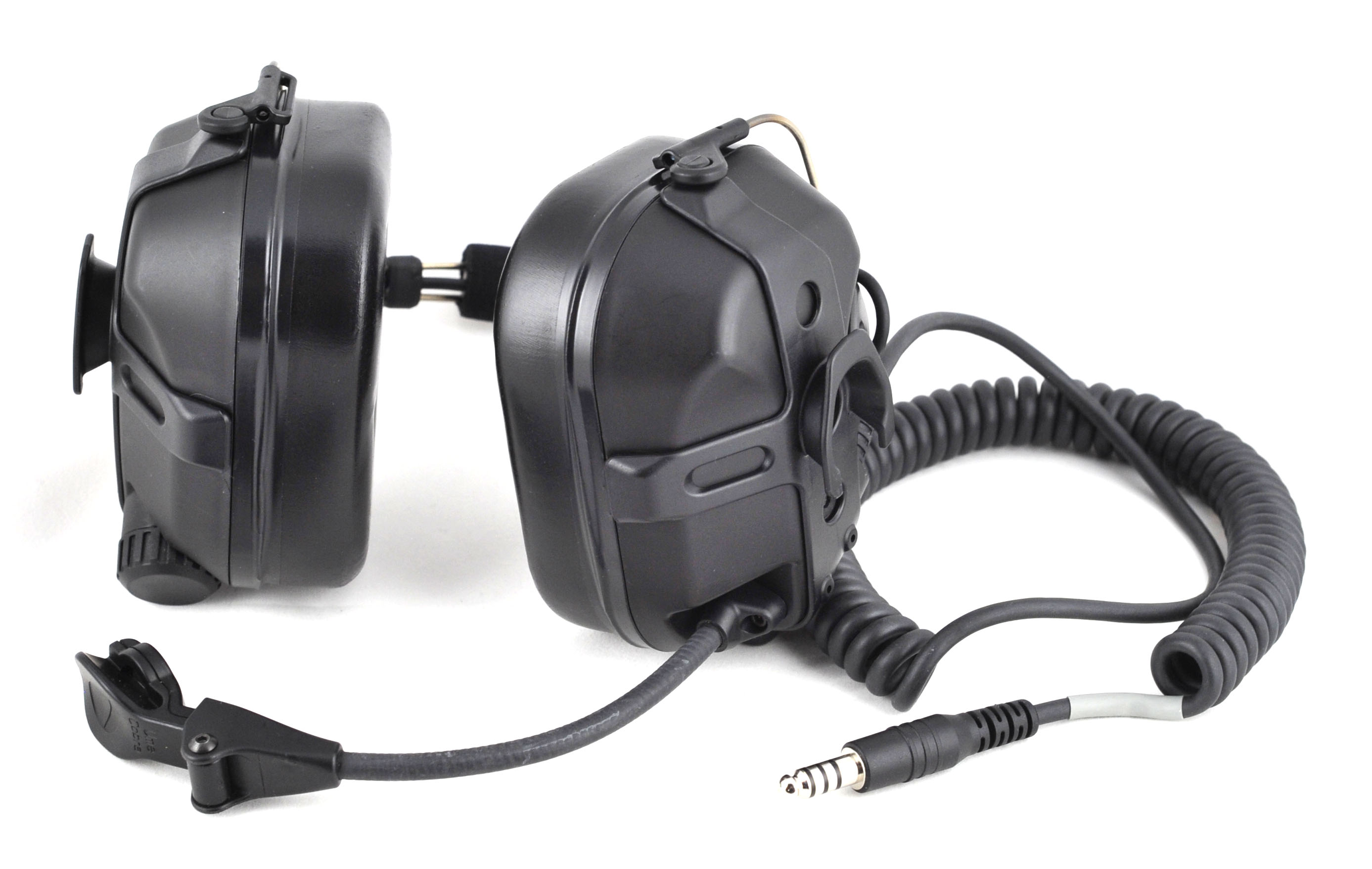
The RATH system is the first aviation helmet meeting FNS/PD and DOI standards to offer a detachable headset. By constructing the headset itself to meet impact test standards, the shell is no longer required to extend to cover the earcups. This design reduces weight, improves CG and significantly increases the ability of a user to customize earseal fit. Adjusting the fit independently of the helmet results in better sound attenuation and long term comfort, while also providing the option to remove the helmet shell but maintain communications during on-the-ground operations. All of our headsets have stereo hear-thru and a 3.5mm earbud jack, and multiple versions and mounting options are available.
Quiet without ANR. See the numbers →
How the headset controls work →
The RATH is compatible with a variety of microphones, each offered with different impedances. As a general rule, lower impedance is typical for military aircraft and higher impedance for civilian aircraft. Contact us to confirm the correct microphone for your aircraft's intercom.
All downleads use a TP-120 connector; other connectors are available on request.
Customize your RATH with a variety of options for visors, goggles, lights, maxillofacial mandibles, ballistic appliques and more.
Many competitor helmets are certified to only one standard (DOI). RATH meets three, with continued lot acceptance testing by USSOCOM at certified laboratories.
| Standard | RATH | HGU-56/P | Alpha Eagle | Paraclete Aspida | LD H-CMR | MSA Gallet | LIFT AV2.1 | Gentex SPH-5 |
|---|---|---|---|---|---|---|---|---|
| DOI/USFSThe DOI/USFS Aviation Helmet Standard | Certified | Certified | Certified | Certified | Certified | Certified | No published claim | Listed1 |
| FNS/PD 96-18The HGU-56/P aircrew helmet specification | Certified | Certified | No published claim | No published claim | No published claim | No published claim | No published claim | No published claim |
| RATH-PUSSOCOM specification: FNS/PD 96-18 plus tougher visor and hearing tests | Certified | No published claim | No published claim | No published claim | No published claim | No published claim | No published claim | No published claim |
1 The SPH-5 is DOI/USFS approved as a military-qualified helmet; the standard lets military approved helmets “remain authorized” without DOI/USFS testing. Gentex's SPH-5 product page and brochure list its impact resistance as “300 Gs (cold) and 400 Gs (hot)” (test conditions not stated). The DOI/USFS standard limits any shell impact to 300 g (§6.5.6).
A red X means we found no published claim of that certification on the maker's website or in its literature, not that the helmet was tested and failed. Corrections welcome.
As of October 2026. Sources: DOI/USFS certified helmet list, DOI/USFS Aviation Helmet Standard rev 4.3, FNS/PD 96-18, USSOCOM RATH-P specification, Gentex SPH-5 product page, manufacturers' published literature.
The Tactical RATH uses the original military-spec EPS impact liner, with no Koroyd in the crown.
It is built to the military helmet standards, FNS/PD 96-18 and the USSOCOM RATH-P specification. Choose the Tactical liner when your program flies to military helmet standards.
The DOI RATH starts with the same military-spec EPS impact liner as the Tactical RATH and adds Koroyd crush-absorbing honeycomb in the crown.
The DOI/USFS Aviation Helmet Standard strikes the crown at a higher velocity than military testing. The added Koroyd ensures the RATH passes that test. Choose the DOI liner when your agency requires DOI/USFS certification.
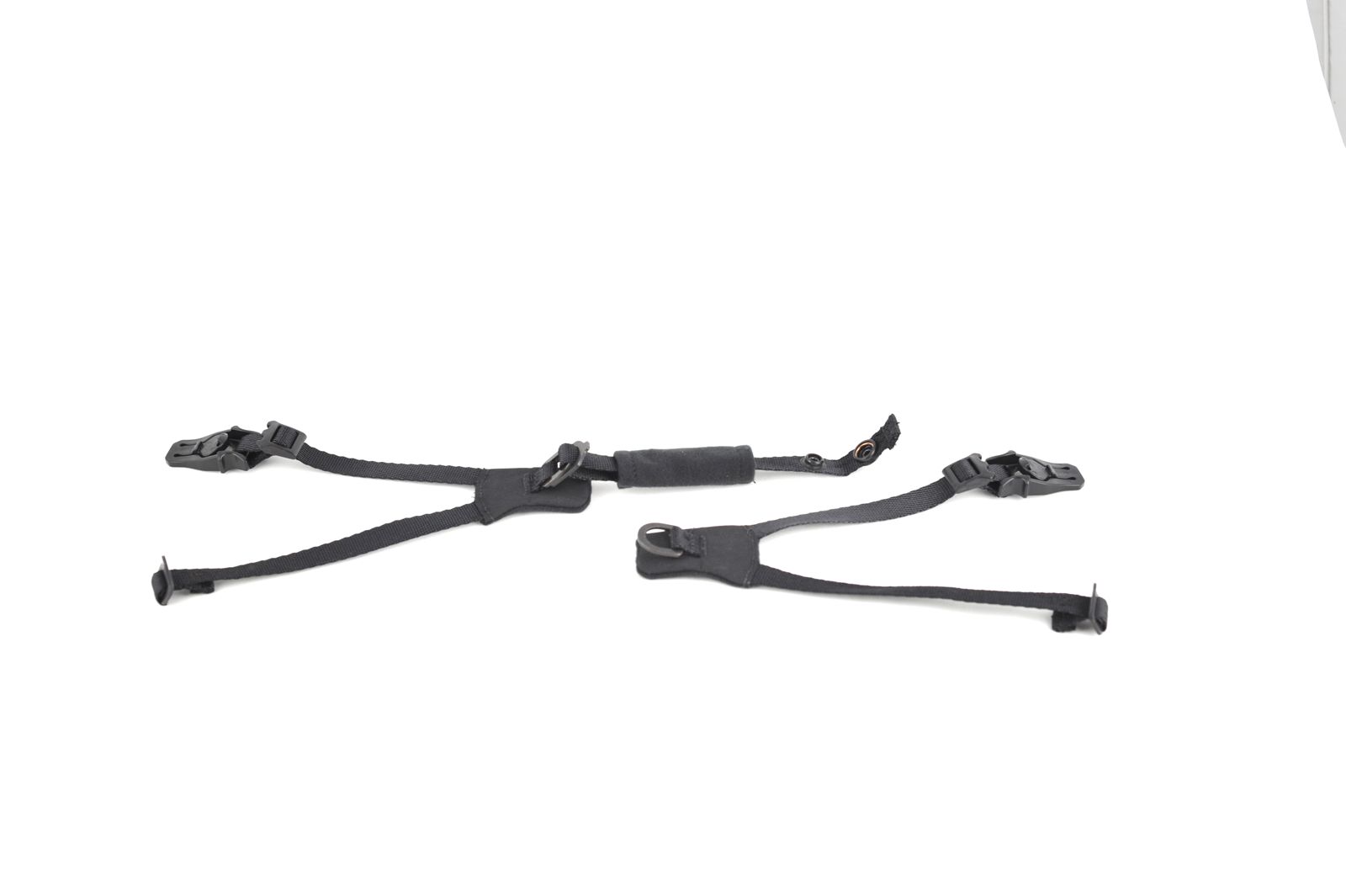
A traditional double D-ring buckle. Passes FNS/PD 96-18 and DOI chinstrap retention.
Adjustable nape strap with a slider, plus adjustment at the chin. Adjusting the temple straps requires disassembly of the helmet.
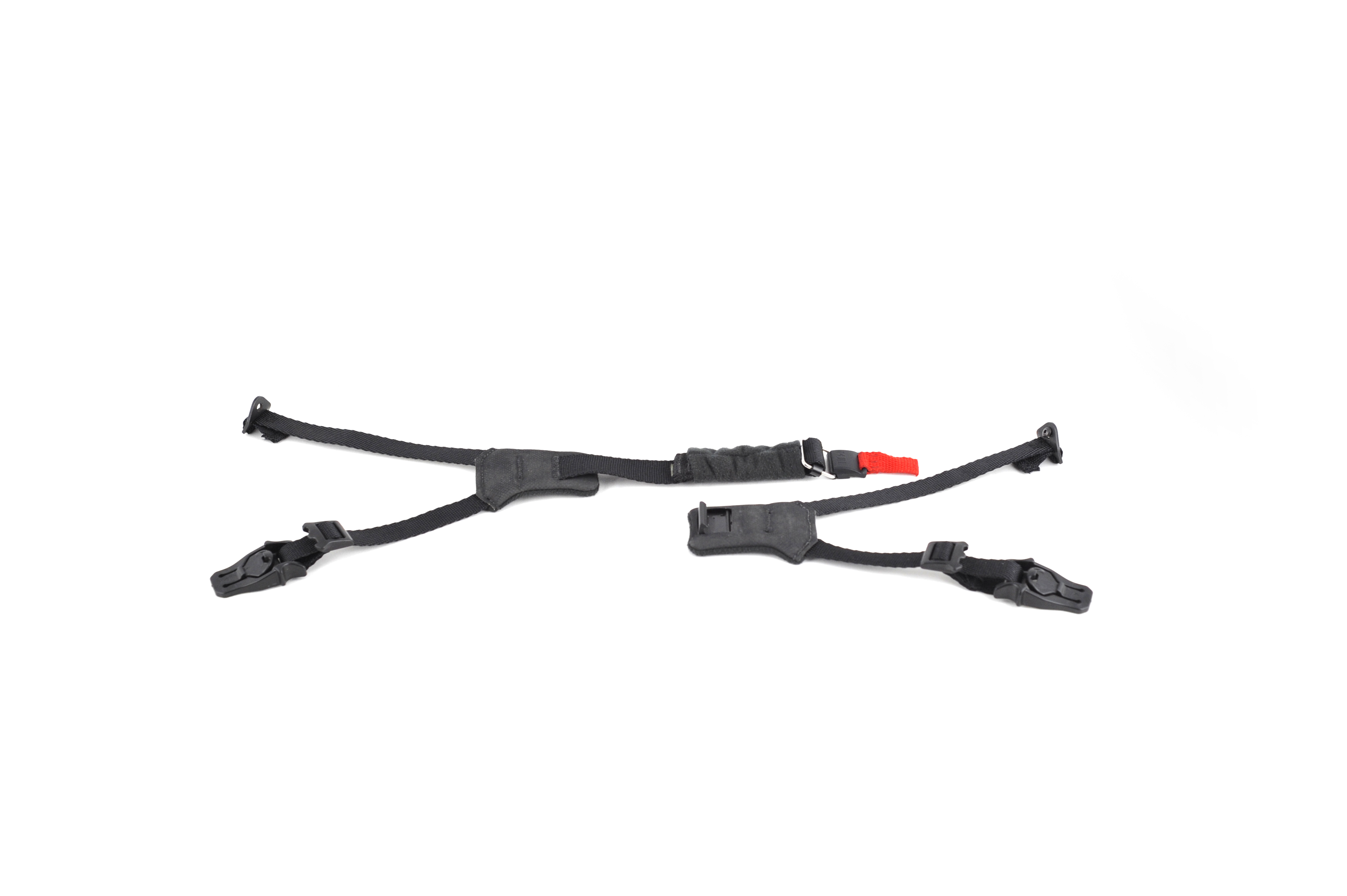
A magnetic Fidlock hook buckle. Passes FNS/PD 96-18 and DOI chinstrap retention.
Adjustable nape strap with a slider, plus adjustment at the chin. Adjusting the temple straps requires disassembly of the helmet.
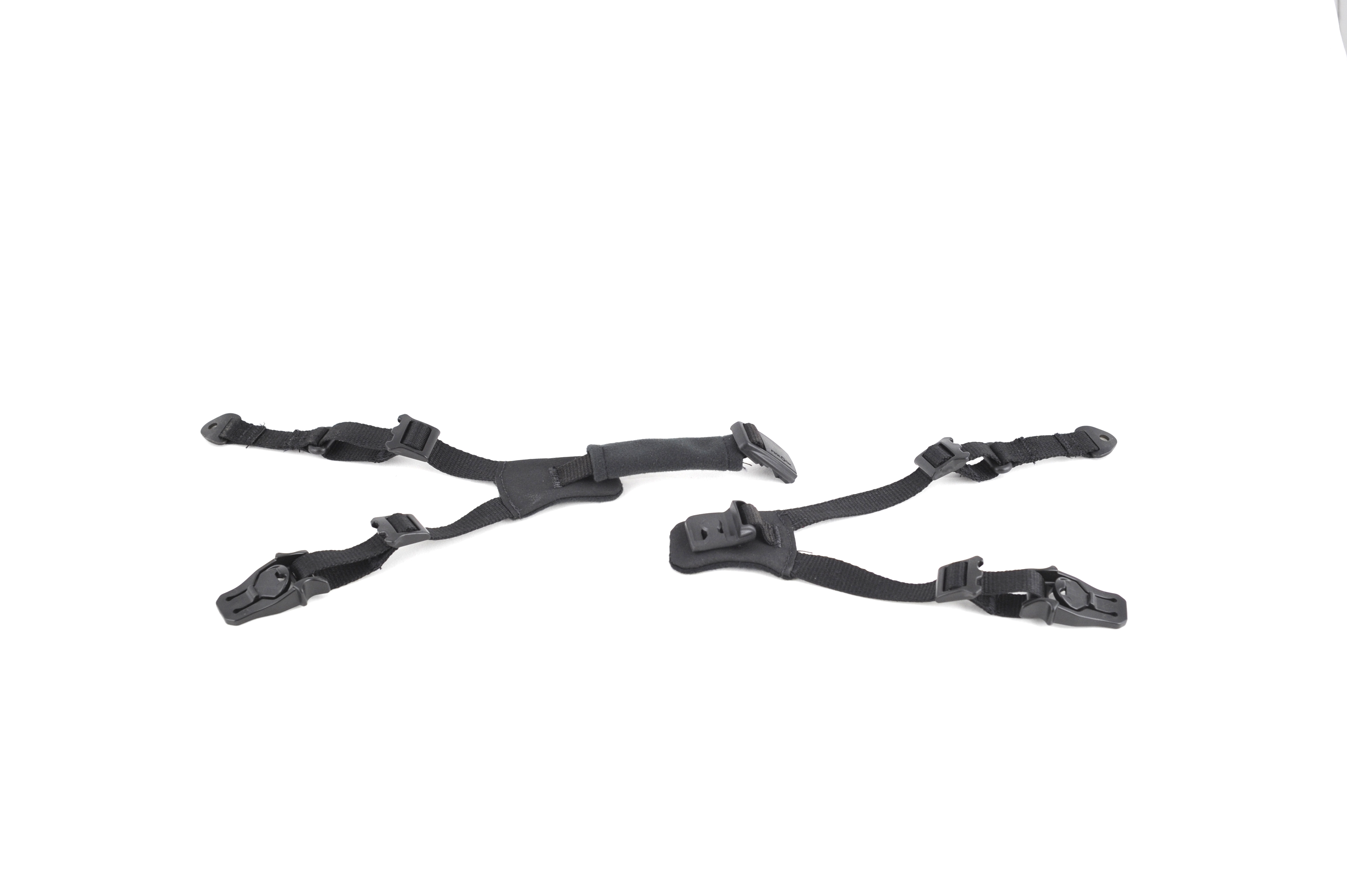
A magnetic Fidlock snap buckle with slider adjustments at the nape, temple and chin, so the temple straps adjust without taking the helmet apart.
Does not pass FNS/PD 96-18 or DOI chinstrap retention.

The screw posts on the back of an ANVIS mount drop into the keyhole slots on the shim and push down to lock. To release, press the plunger on top of the shim and lift the mount.

Works like the standard ANVIS quick-release shim, with two locking tabs that hold the front of the ballistic applique.
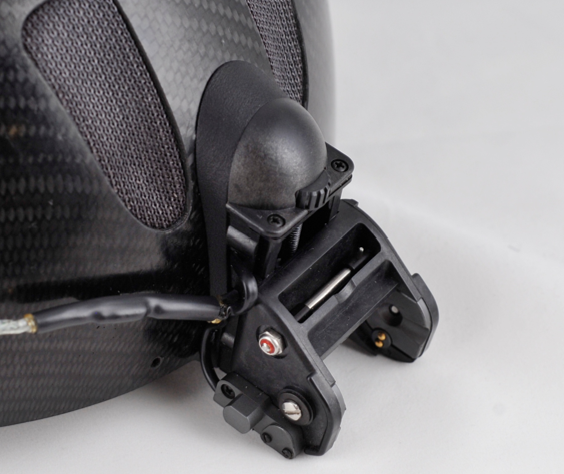
An ANVIS mount fixed permanently to the front of the shell, for helmets that keep the same NVG mount installed rather than swapping between helmets.

An ANVIS-style dovetail connector that securely holds the NVG battery pack at the rear of the helmet.
Want to run a Velcro-backed pack too? The dovetail to Velcro adapter slides into the dovetail mount and gives you a Velcro surface.
Using a non-Wilcox dovetail battery pack?
Some older packs catch the helmet at their edges as they slide onto the dovetail. The dovetail standoff shim goes under the mount and adds stand-off so the pack slides on cleanly. Not needed with the Wilcox Aeronox battery pack.

A single Velcro mount at the rear of the helmet for a Velcro-backed NVG battery pack or counterweight.
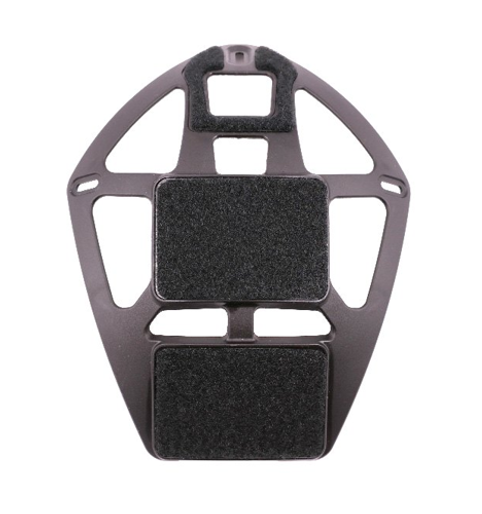
The CAGE mount gives you three separate Velcro attachment locations at the rear of the helmet for batteries, IFF strobes and more.
Available in two sizes: MD, and LG through XXL.
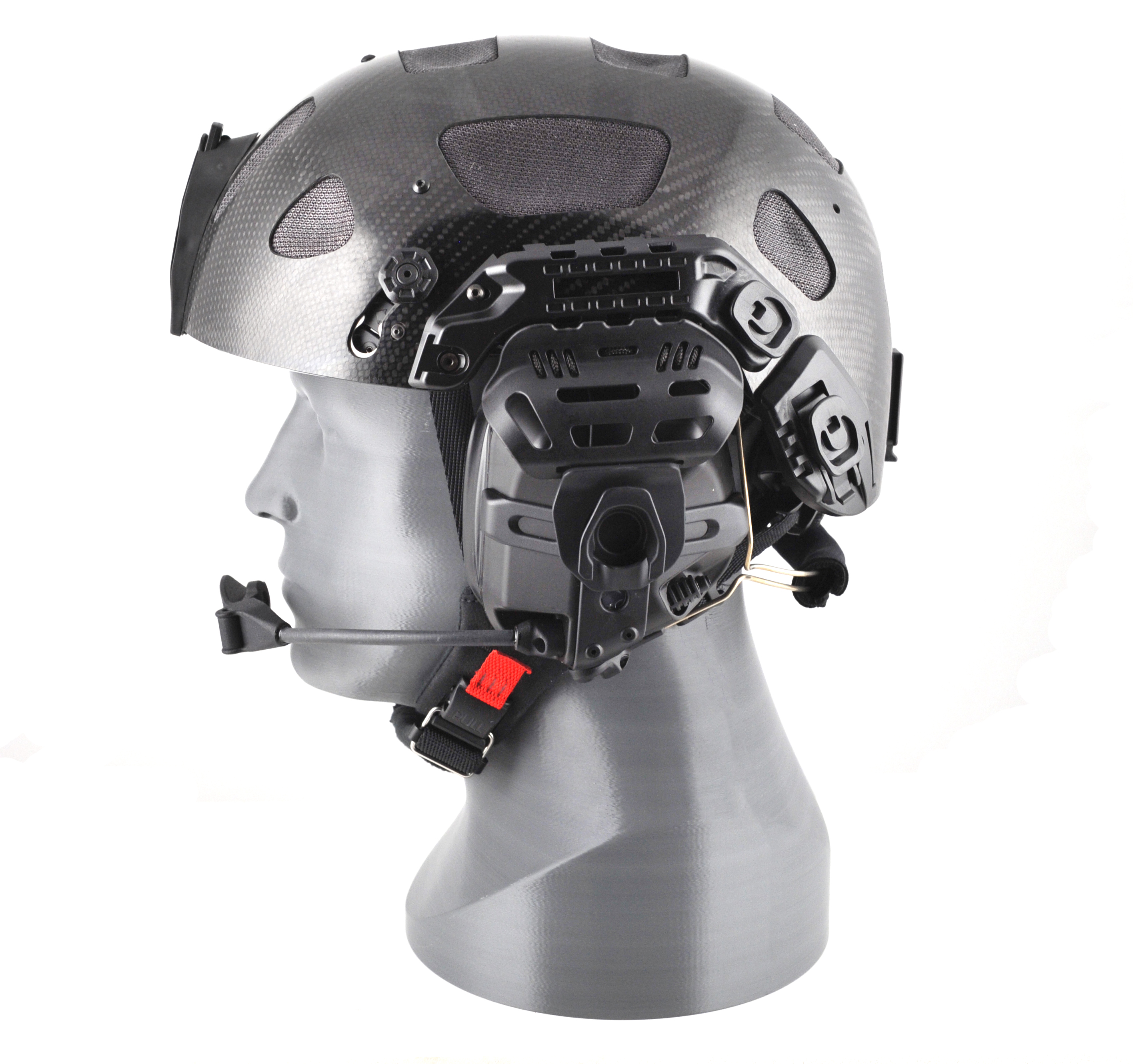
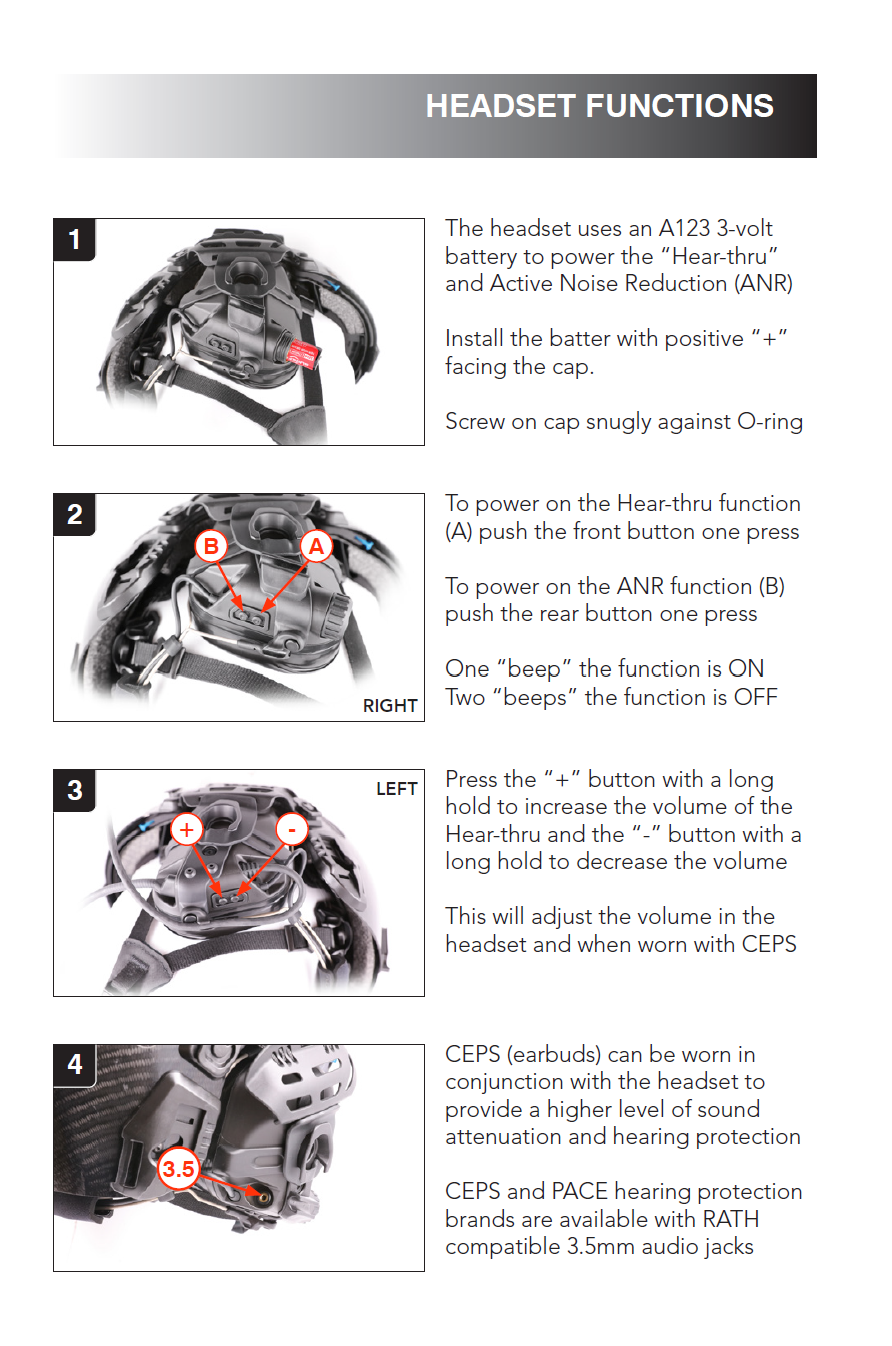
Stereo hear-thru lets you hear people around you without taking the helmet off. The 3.5mm jack takes earbuds such as CEP or PACE for extra hearing protection.
Adds Active Noise Reduction (ANR) to the G2's stereo hear-thru and 3.5mm earbud jack.
Adds Bluetooth to the G3's hear-thru, Active Noise Reduction and 3.5mm earbud jack.
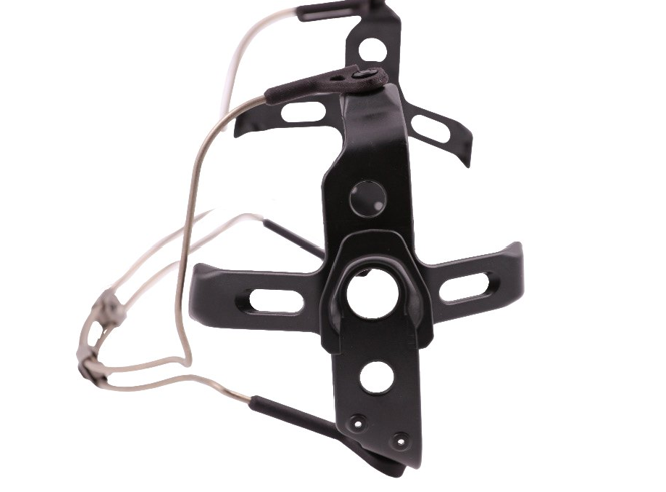
A springwire headband with bridge clips that holds the earcups in place. It can be worn as a stand-alone headset or integrated into the RATH.
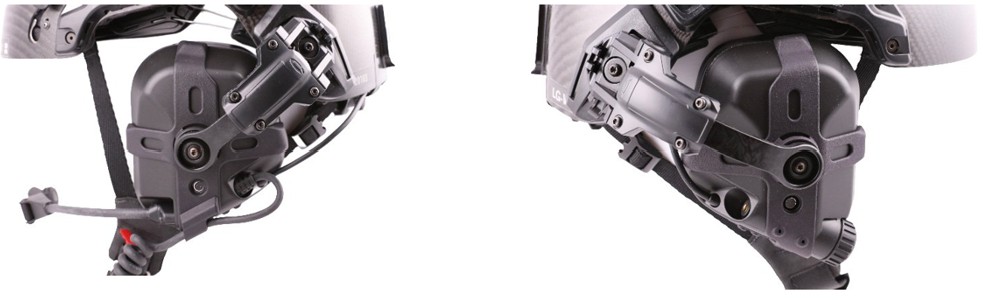
Ops-Core Rail Mount Arms are customized to attach the earcups to the helmet rails. The earcups can be positioned off or folded behind the helmet, allowing the user to hear ambient noise without utilizing the hear-thru feature. These arms provide a solution for medics who need to use a stethoscope while wearing the RATH.
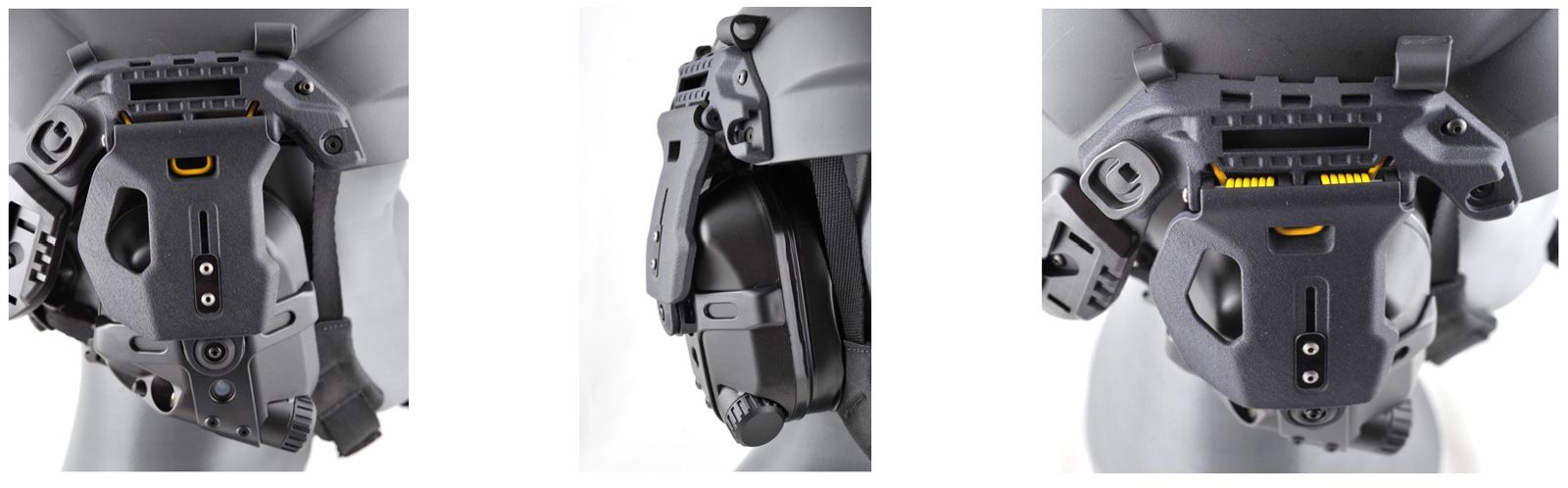
Spring-loaded arms deliver customizable earseal pressure, and gimbal-mounted earcups provide a wide range of adjustment to position the earcups to the precise location of your ears. Standard on the RAVN, available on the RATH. Best for aircrew who don't need the ability to wear the headset as a stand-alone product or want a more traditional setup in their flight helmet.
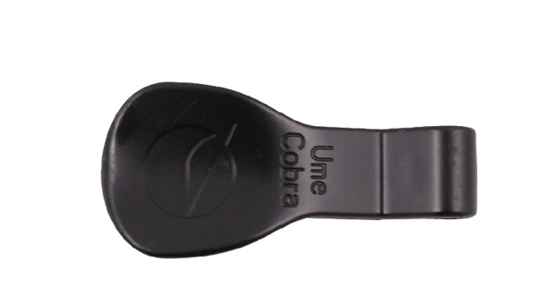
The UME Cobra comes in three impedance versions: 5 Ω dynamic, 150 Ω dynamic, and 3K electret with amplifier.
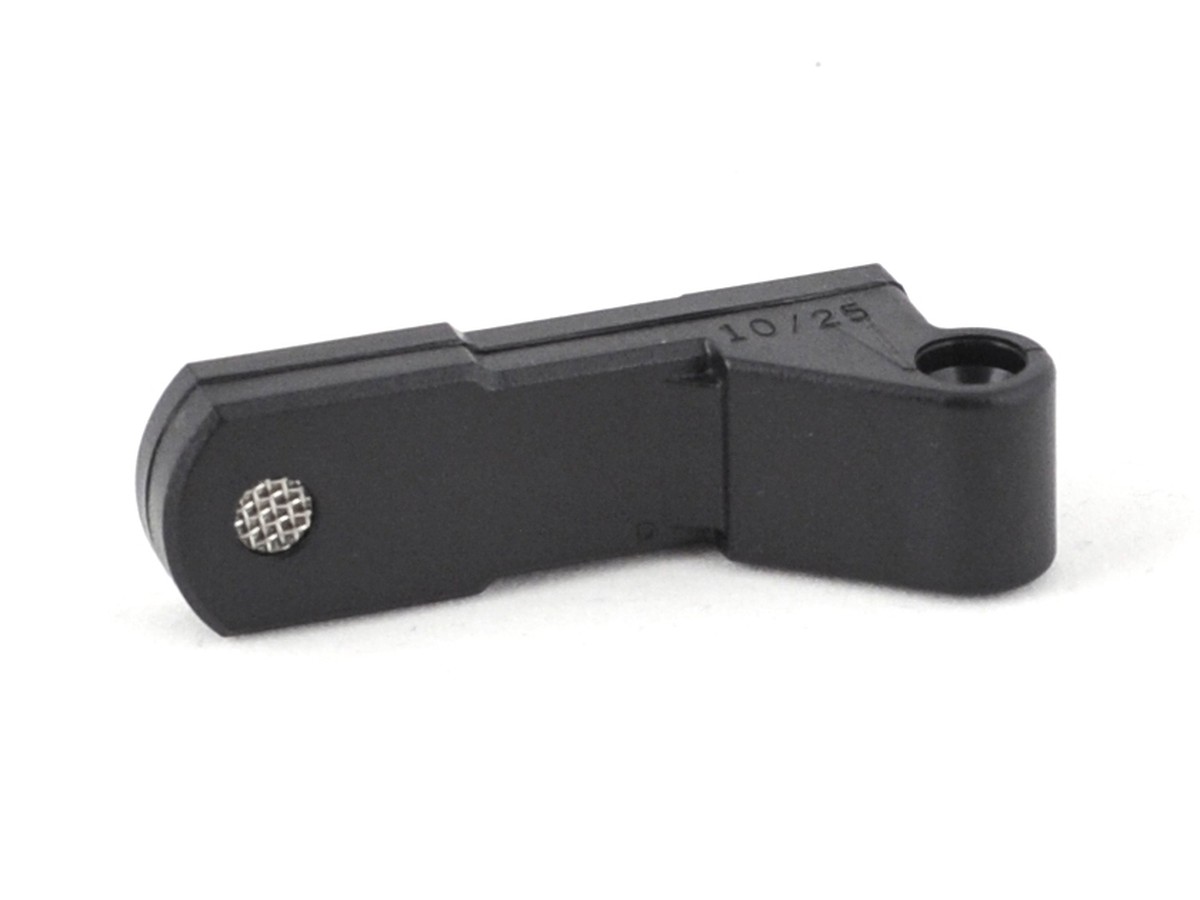
Two David Clark versions: the M-87 5 Ω dynamic and the M-7 3K electret with amplifier.

One mic with a switch between dynamic and amplified electret, for crews who fly both low- and high-impedance aircraft.
24" straight downlead with a TP-120 connector.
36" straight downlead with a TP-120 connector.
48" straight downlead with a TP-120 connector.
48" coiled downlead with a TP-120 connector.
Every VNE headset innately provides strong passive protection. The G2 blocks more noise than the DOI/USFS and military minimums at every test frequency with no ANR activated. The G3 and G4 add Active Noise Reduction (ANR) for additional attenuation in the low tones, and if the ANR is off or the battery dies, the system continues to provide significant acoustic protection. Half of each earcup is filled with Koroyd crush-absorbing honeycomb, so it protects your head as well as your hearing, something no other standalone ANR headset is built to do.
125 Hz 29.1 dB (min. 17) · 250 Hz 34.0 dB (min. 17) · 500 Hz 37.6 dB (min. 21) · 1 kHz 42.0 dB (min. 29) · 2 kHz 47.4 dB (min. 37) · 3.15 kHz 50.1 dB (min. 41) · 4 kHz 52.5 dB (min. 44) · 6.3 kHz 53.5 dB (min. 46) · 8 kHz 52.9 dB (min. 44)
Measured on the RATH helmet system, RATH-P testing to ANSI S12.6.
Attenuation is how much outside noise a headset keeps from reaching your ear, measured in decibels (dB) at each pitch, from the low rumble of the rotor to the high whine of the transmission.
Blocking noise does two jobs. It protects your hearing, and it lets you hear the intercom and radio clearly over the aircraft. The quieter it is inside the earcup, the less you have to turn up the volume to understand every call.
Every 10 dB blocked makes noise sound about half as loud and cuts the sound energy reaching your ear by 90%. Blocking 40 dB turns a 110 dB gearbox tone into about 70 dB at your ear.
Passive attenuation comes from the headset itself: the earcup, its seal and the air space inside. It works all the time, with no batteries. Active Noise Reduction (ANR) on the G3 and G4 adds more quieting in the low tones on top of that.
Wear glasses? Thick frame arms interrupt the earseal and reduce sound attenuation. Some frames are made with thin arms that sit flat under the earcup seal.
Eyewear that fits under the headset →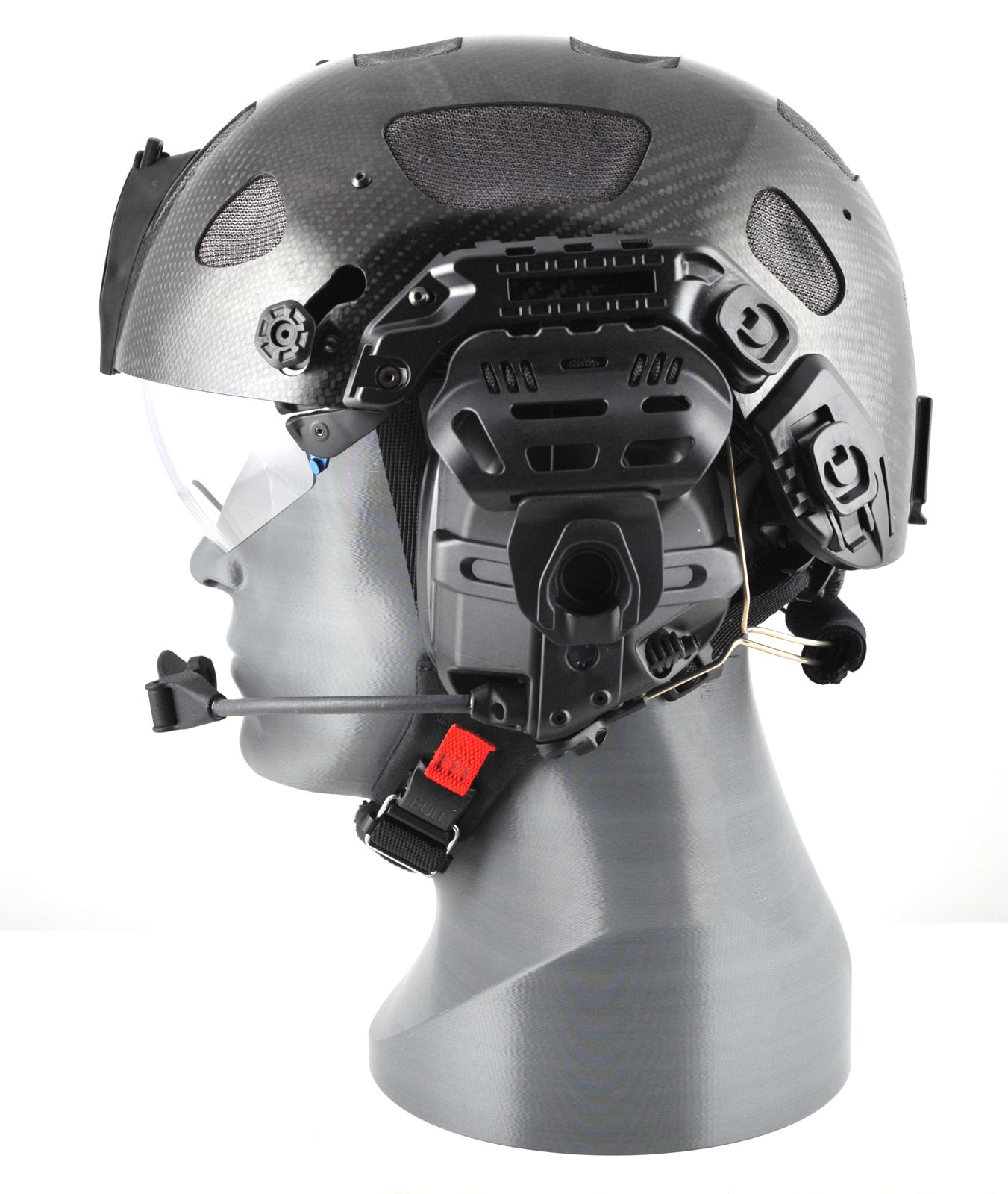
The right earcup has two buttons: the front one turns hear-thru on and off, and the rear one does the same for ANR on the G3. One beep means on, two mean off. Hold + or – on the left earcup to set the volume. A CR123 battery powers the electronics, and the 3.5mm jack takes CEP or PACE earbuds.
The RATH meets and exceeds FNS/PD 96-18, the Aircrew Integrated Helmet System specification behind the HGU-56/P, with first article and continued lot acceptance testing by USSOCOM at certified laboratories. It also passes the DOI/USFS Aviation Helmet Standard.
Helmet weight includes visor, NVG shim, rails, liner and skullplate suspension. The headset adds 410 g (without downlead cable). ±3% tolerance.
Customize your helmet with a variety of options for visors, goggles, lights, maxillofacial mandibles, ballistic appliques and more.
See helmet accessories